

What to do in an Emergency Situation
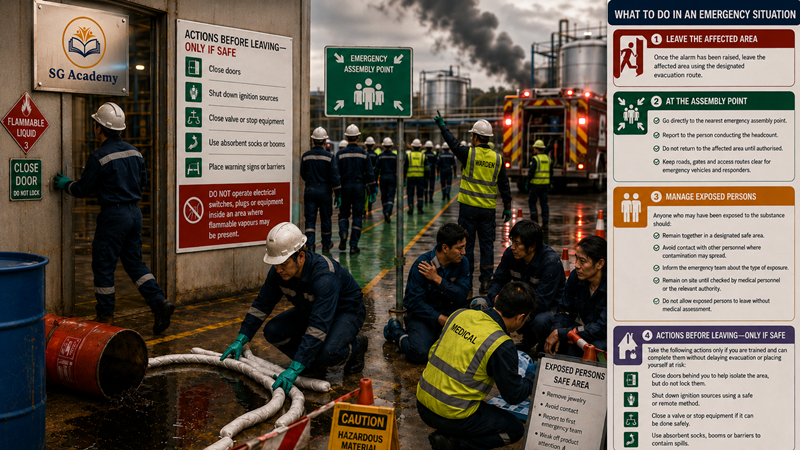
Once the alarm has been raised, leave the affected area using the designated evacuation route.
At the Assembly Point
-
Go directly to the nearest emergency assembly point.
-
Report to the person conducting the headcount.
-
Do not return to the affected area until authorised.
-
Keep roads, gates and access routes clear for emergency vehicles and responders.
Manage Exposed Persons
Anyone who may have been exposed to the substance should:
-
Remain together in a designated safe area.
-
Avoid contact with other personnel where contamination may spread.
-
Inform the emergency team about the type of exposure.
-
Remain on site until checked by medical personnel or the relevant authority.
Do not allow exposed persons to leave without medical assessment.
Actions Before Leaving—Only If Safe
Take the following actions only if you are trained and can complete them without delaying evacuation or placing yourself at risk:
-
Close doors behind you to help isolate the area, but do not lock them.
-
Shut down ignition sources using a safe or remote method.
-
Close a valve or stop equipment if it can be done safely.
-
Use absorbent socks, booms or barriers to prevent the spill from spreading.
-
Place warning signs or barriers to prevent unauthorised entry.
Do not operate electrical switches, plugs or equipment inside an area where flammable vapours may be present.