
The Dangers of Chemical Spillages
Chemical spillages can create serious risks to people, equipment, property, and the environment. The level of danger depends on the type of chemical, the quantity spilled, where the spill happens, and how quickly it is controlled.
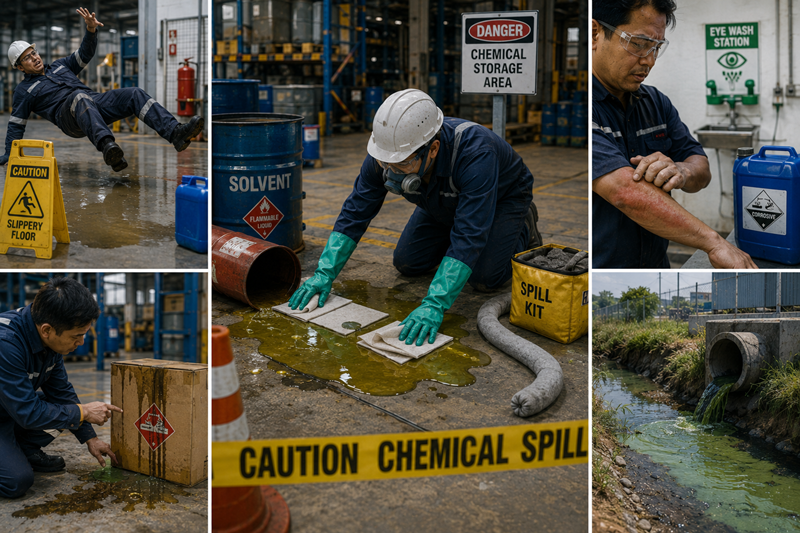
Depending on the nature of the chemical spilt, those dangers could be:
- Slip, trip, and fall hazards
Liquids on the floor can make surfaces slippery. Containers, absorbents, hoses, or emergency equipment used during the response may also create trip hazards. - Health risks to workers
Some chemicals can cause skin irritation, burns, eye damage, breathing problems, poisoning, or long-term health effects if they are inhaled, touched, or swallowed. - Contamination of materials and equipment
Spilled chemicals can damage tools, machines, packaging, products, PPE, or nearby stored materials. Contaminated items may need to be cleaned, isolated, or disposed of safely. - Risk of fire or explosion
Flammable chemicals, vapours, solvents, oils, or fuels may ignite if they contact hot surfaces, sparks, electrical equipment, or other ignition sources. - Environmental contamination
If chemicals enter drains, soil, waterways, or unprotected ground, they may cause pollution and create legal or cleanup issues.
The most important action is to respond safely. Workers should never rush into a spill without knowing the chemical hazard, checking the Safety Data Sheet, wearing suitable PPE, and following the company spill response procedure.
A small spill can become a serious emergency if it is ignored, handled incorrectly, or allowed to spread.