

The Routes of Exposure
Hazardous substances can affect the body in different ways, depending on how they enter the body. These entry paths are called routes of exposure.
Understanding the route of exposure is important because it helps workers choose the right controls, such as ventilation, PPE, hygiene practices, spill kits, and emergency response actions.
The main routes of exposure are:
| Route of Exposure | How It Happens | Possible Effects |
|---|---|---|
|
Inhalation
|
Breathing in fumes, vapours, gases, mists, dusts, or fine particles released from a chemical spill. | May cause coughing, dizziness, headache, breathing difficulty, lung irritation, poisoning, or long-term respiratory disease. |
|
Absorption
|
Chemical contact with skin or eyes, especially when PPE is not used or contaminated clothing is not removed. | May cause skin irritation, chemical burns, dermatitis, eye damage, or chemicals entering the bloodstream through the skin. |
|
Ingestion
|
Chemicals enter the mouth due to poor hygiene, contaminated hands, eating or drinking in chemical areas, or contaminated food and drink. | May cause nausea, vomiting, poisoning, digestive injury, or other serious health effects. |
|
Injection
|
Chemicals enter directly through cuts, puncture wounds, broken skin, or high-pressure injection from leaking equipment. | Can allow the substance to enter the bloodstream quickly and may cause severe internal injury or poisoning. |
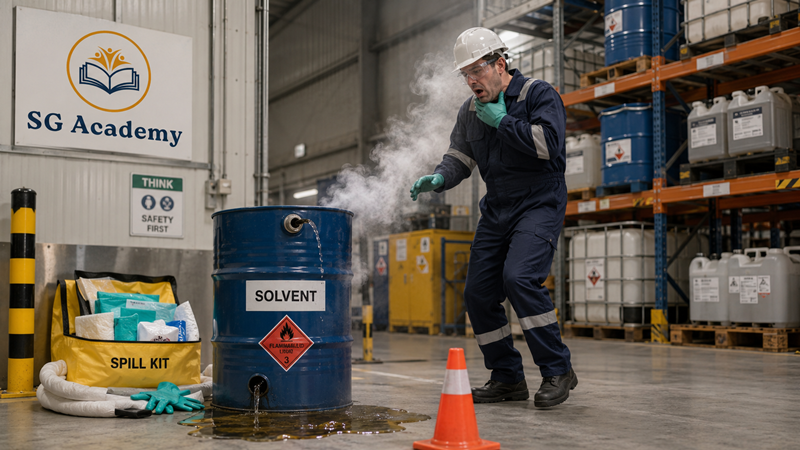
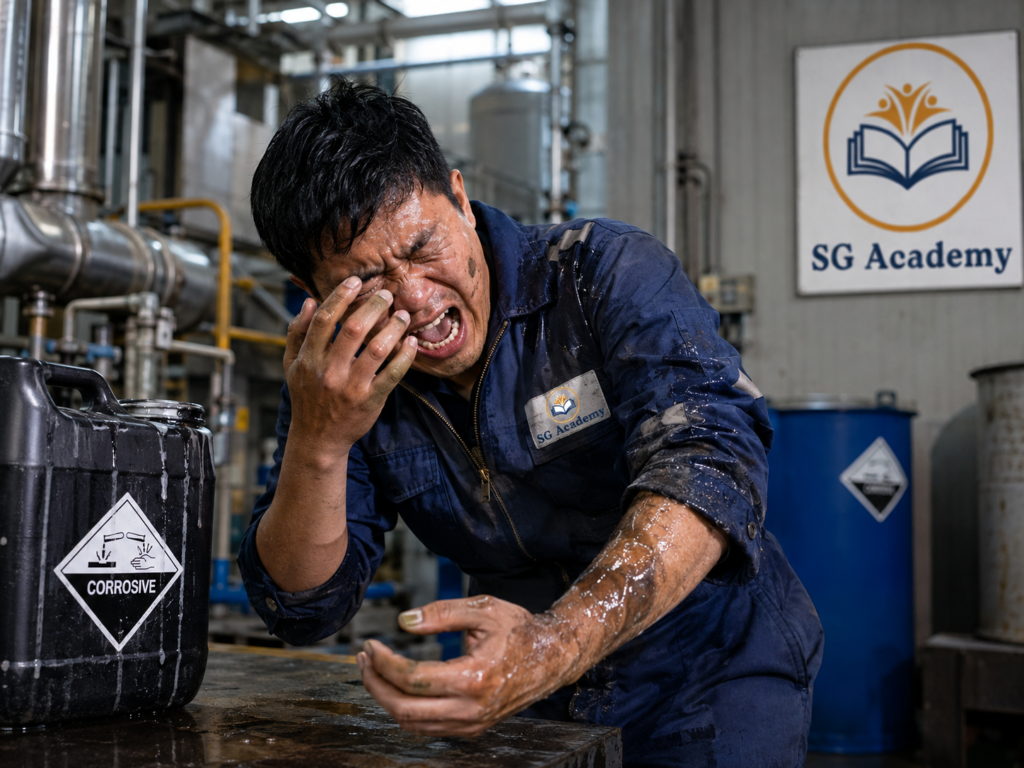
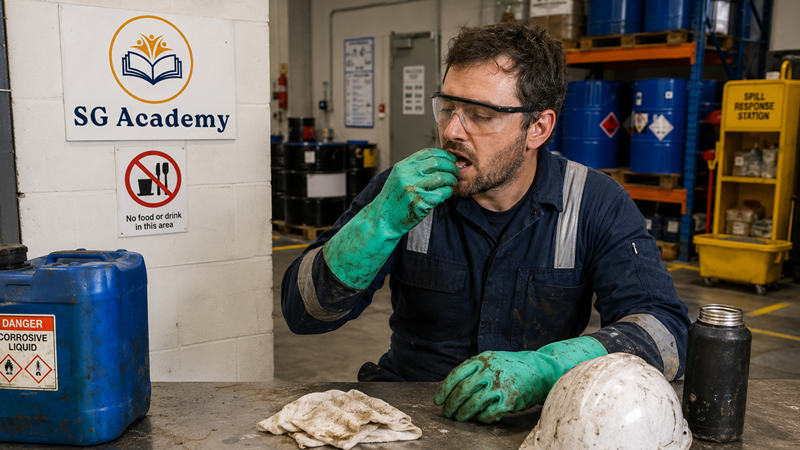
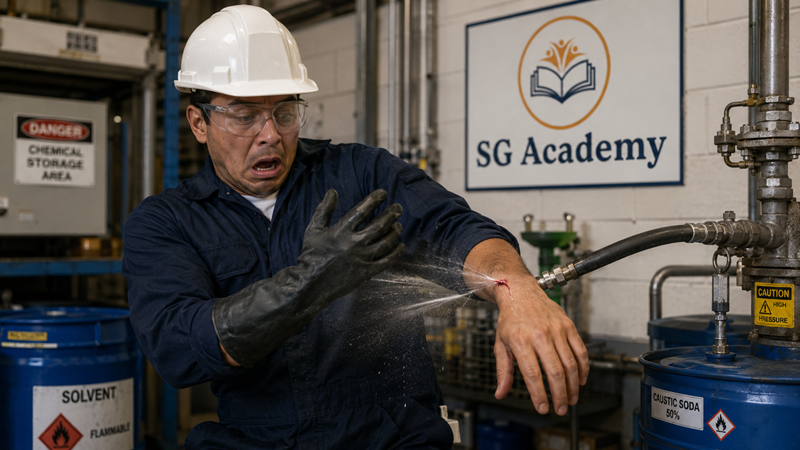
During a spill response, workers must avoid direct contact with the chemical and prevent it from entering the body. Always check the chemical label and Safety Data Sheet, use the correct PPE, control the area, avoid breathing vapours, and wash hands and exposed skin properly after the response.
Contaminated clothing should be removed safely and handled according to company procedure. Eating, drinking, smoking, or touching the face should never be done in contaminated areas.
A chemical spill is not only dangerous when it touches the skin. It can also harm workers through breathing, swallowing, skin contact, or entry through broken skin.