

How to Prevent Spillages in the Workplace
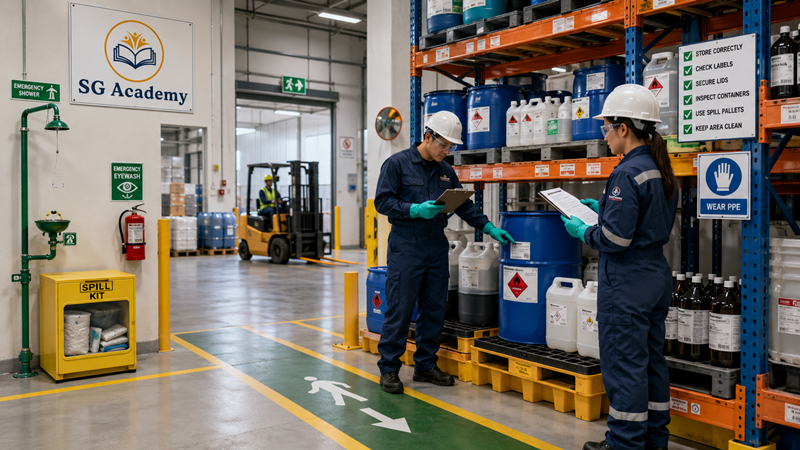
How to Prevent Spillages in the Workplace
Chemical spillages are easier to prevent than to control after they happen. Prevention starts with good planning, correct storage, proper handling, and regular inspection.
To prevent spillages in the workplace:
- Purchase only what is needed
Avoid storing excessive quantities of chemicals. Smaller stock levels reduce the chance and possible impact of a spill. - Choose less hazardous materials where possible
If the work can be done using a safer chemical, choose the less hazardous option. This reduces the risk to workers and the environment if a spill occurs. - Use non-hazardous alternatives where practicable
Substitution is one of the most effective ways to reduce chemical risk. If a hazardous chemical is not required, replace it with a safer product. - Control traffic in storage and work areas
Limit unnecessary vehicle and pedestrian movement around chemical storage areas to reduce the risk of containers being hit, dropped, or damaged. - Use secondary containment
Store liquid chemicals and liquid waste in bunds, spill trays, drip trays, or secondary containers to prevent leaks from spreading to floors, drains, soil, or waterways. - Inspect containers and storage areas regularly
Check shelving, pallets, drums, bottles, IBCs, lids, labels, and container condition. Look for corrosion, cracks, leaks, swelling, poor stacking, or damaged packaging. - Keep emergency equipment accessible
Workers must know the location of spill kits, eyewash stations, emergency showers, fire extinguishers, alarms, exits, and evacuation routes. - Train and supervise workers
Workers who handle chemicals must understand the Safety Data Sheet, correct PPE, safe transfer method, storage rules, and spill response procedure.
Preventing spills is part of daily chemical safety. Keep chemicals properly stored, use the right containers, inspect them regularly, and report any leak or damage immediately.