
How to Manage a Spillage
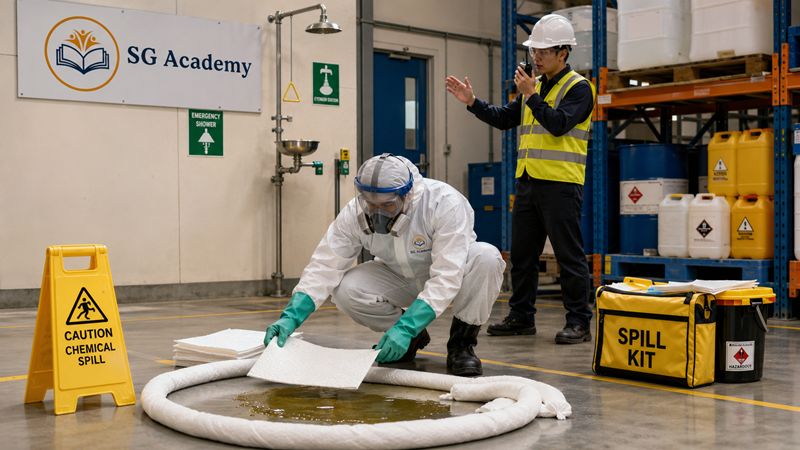
Before responding to a spill, first confirm that you have the necessary information, training and authority to manage it safely.
Plan Your Response
Consider the safest order of action:
-
Do you need to raise the alarm or wait for assistance?
-
Is anyone injured or contaminated?
-
Can the source be stopped safely, such as closing a valve?
-
Are there ignition sources that must be removed?
-
Is evacuation required?
Evacuate and Report When:
-
There is a risk of toxic gas, vapour or respiratory exposure.
-
The chemical is unknown or highly hazardous.
-
The spill is large, spreading or difficult to contain.
-
You do not have the correct training, PPE or spill kit.
-
Additional assistance is required.
Never attempt to clean up a spill if you do not understand the chemical hazards or the correct response procedure.
Attend to Injured Persons
If anyone is injured or contaminated:
-
Raise the alarm and inform your supervisor.
-
Move the person away from danger, if safe to do so.
-
Begin emergency decontamination or first aid only if trained.
-
Contact the emergency response team or medical assistance.
Wear the Correct PPE
Always use PPE specified in the Safety Data Sheet and workplace procedure, such as:
-
Chemical-resistant gloves
-
Safety goggles or face shield
-
Protective clothing
-
Safety footwear
-
Respiratory protection, when required and authorised
PPE is the last line of defence. It does not replace proper training, safe procedures, ventilation or spill-control equipment.